
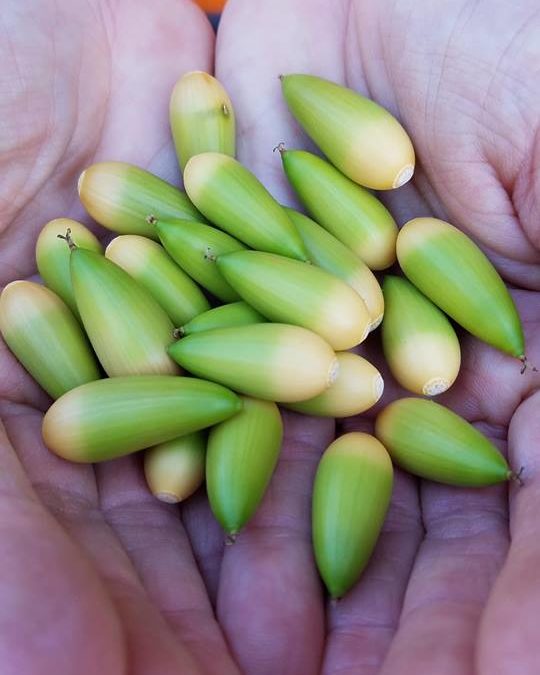
Yes, each oak tree can produce many acorns. However, they do something called masting: dropping thousands of acorns in select years. Many animals, including mice, deer, squirrels, bears, scrub jays and acorn woodpeckers eat acorns to survive. In masting years, trees flood the forest with acorns, so animals cannot eat every single one. That is called predator satiation. It leaves a few acorns behind to grow. There will be many little saplings that sprout on their own, but gophers, rabbits eat the roots and squirrels eat the sprouted acorn. Many insects also ruin acorns before they even hit the ground.
Let’s say the baby acorn finds soil and sprouts. It’s still not assured of growth. Baby acorns need lots of sunlight, so a crowded forest canopy may keep it from getting enough light to survive. Too much wet weather can cause them to rot.
Additionally, spring weather must be good for the mature trees to flower. Drought conditions also reduce the number of viable acorns. Trees “communicate” to decide which years are good for masting and which years are not. They all over-produce acorns at once, and the effect is multiplied. Trees, like people, also need rest. After a mast year, trees will rest for 2-5 years to rebuild their energy for the next mast cropping.
What triggers these boom-and-bust years? Scientists don’t know, but they have theories: environmental triggers? Pollen availability? Chemical signaling? Maybe you will be the scientist who discovers the reason one day?
What we do know is that oaks are a keystone species in our area and support a wide variety of wildlife. Therefore, they deserve all the support we can give them to survive and thrive in challenging times. That’s what Sky Valley Volunteers is all about! Come join us, make a positive difference and leave a living legacy.
Contact: skyvalleyvolunteers@gmail.com
Source: Lu Esther T. Mertz Library
Plant and Research Help
New York Botanical Garden